English
 Español
 Deutsch
 Nederlands
 Français
 Svenska
 Italiano
The Best Costa Blanca North Town to Buy In (By What You Actually Want)
Not a ranked list — a buyer-profile matcher, town by town, with honest trade-offs and no hype.
Mallorca
El mercado inmobiliario de Mallorca, el estilo de vida mediterráneo y la reconocida vida costera de la isla, a través de la experiencia de expertos locales y una cuidada selección de propiedades.
Mallorca es uno de los destinos inmobiliarios más prestigiosos de Europa, famosa por su impresionante costa, sus pintorescos pueblos, su vibrante capital y su excepcional calidad de vida. Desde villas de lujo frente al mar y apartamentos contemporáneos en Palma hasta fincas históricas en el campo y elegantes viviendas en localidades tan codiciadas como Deià, Sóller y Port d'Andratx, la isla ofrece uno de los mercados residenciales más diversos de España. Gracias a su atractivo para vivir durante todo el año, sus conexiones internacionales y su perdurable reconocimiento mundial, Mallorca continúa atrayendo a compradores exigentes que buscan tanto calidad de vida como una inversión a largo plazo.
Mallorca's coastline means different things depending on where a buyer looks. In the south-west, Port d'Andratx itself is more cove and marina than open beach, while Bendinat and Portals Nous combine small sandy coves with beach-club culture. In the north, Port de Pollença offers a long, gently shelving sandy bay looking toward the Formentor peninsula, and Alcúdia has some of the island's longest sandy beaches alongside its own marina at Port d'Alcúdia. In the south-east, the character shifts to coves rather than bays: Cala d'Or's Cala Gran, Cala Esmeralda and Cala Petita, and the quieter coves around Santanyí and Porto Petro, are sheltered, small-scale and largely free of high-rise development.
The Serra de Tramuntana, a UNESCO World Heritage cultural landscape inscribed in 2011, runs around 90km along Mallorca's north-west coast, up to 15km wide, and covers roughly 30% of the island's land area across more than 20 municipalities. It is the defining natural backdrop for both the south-west's prime coastal zone and the north's Pollença/Alcúdia area, shaping a terraced, mountainous landscape with no real equivalent on the flatter Costa Blanca.
Mallorca carries genuine Michelin weight: the 2026 Michelin Guide lists 12 stars across 11 restaurants on the island, including VORO in Canyamel (the island's only two-star restaurant, chef Álvaro Salazar) and nine one-star kitchens, among them Marc Fosh and Zaranda, both in Palma's old town. Marc Fosh — the first British chef to win a Michelin star in Spain — cooks in a former convent-turned-hotel on Carrer de la Missió, squarely in the Casco Antiguo. This is a materially different dining landscape to the Costa Blanca towns covered elsewhere in this series, where Michelin recognition is far sparser.
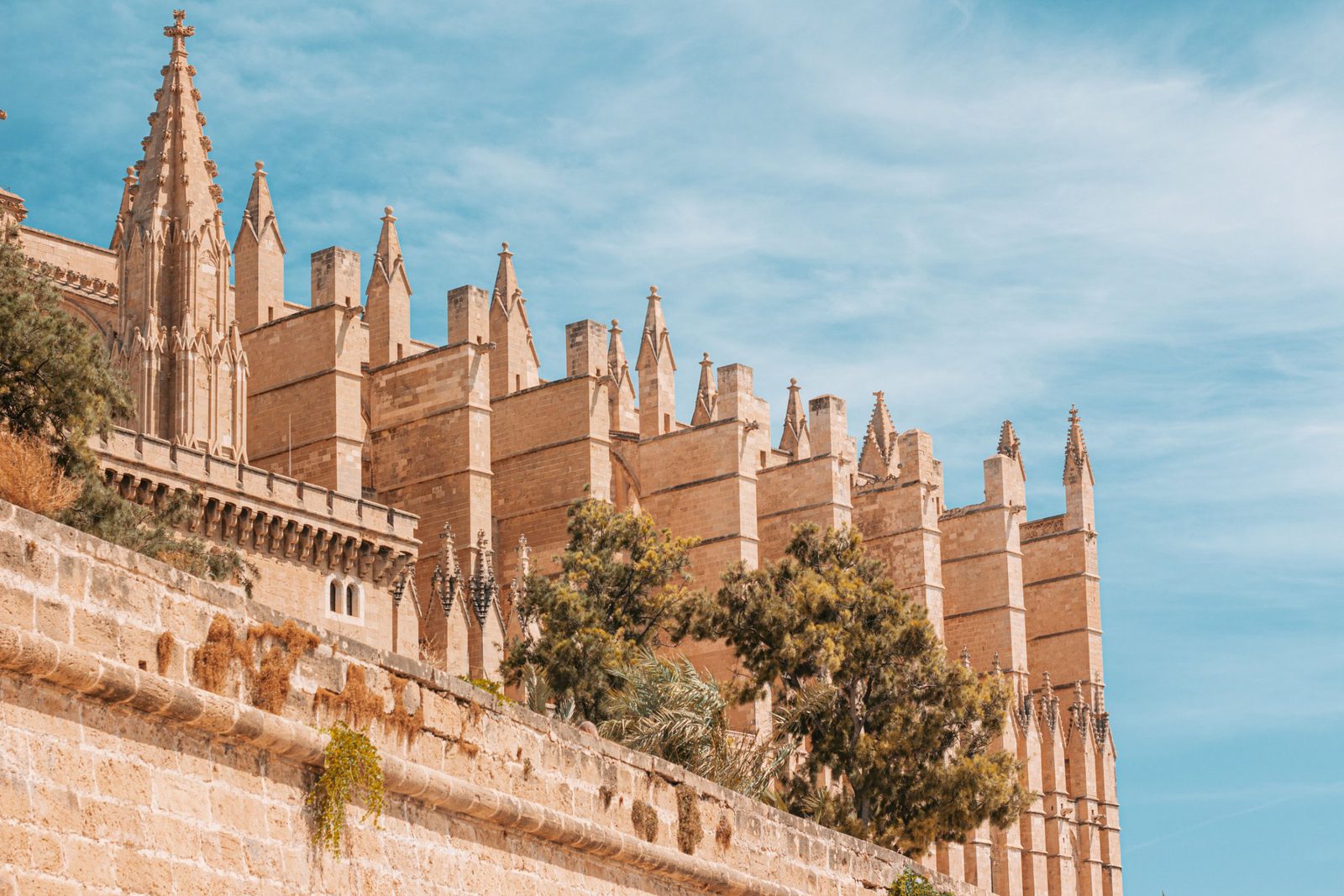
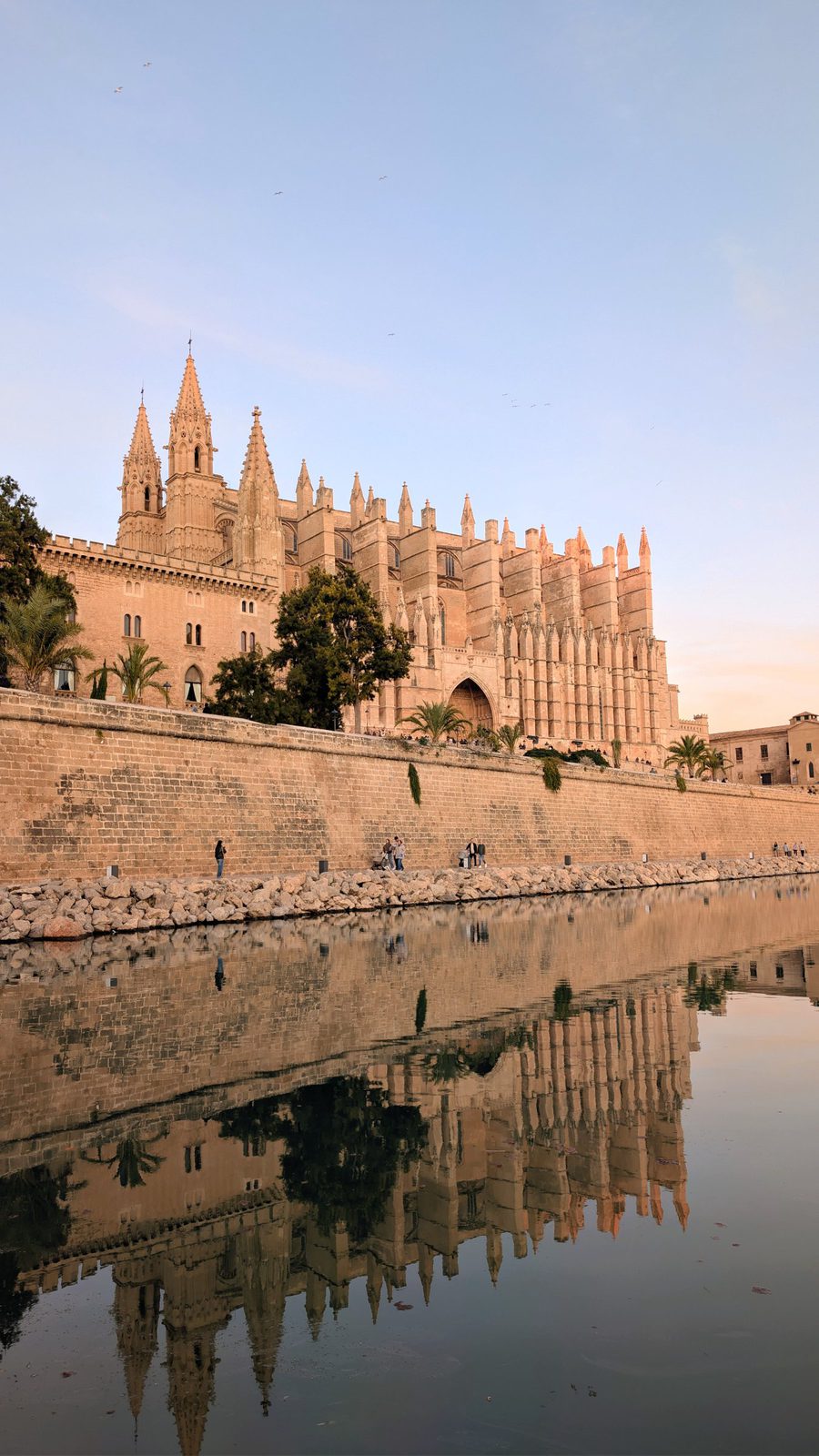
The south-west's marina infrastructure anchors its luxury positioning: Port d'Andratx's Club de Vela has 475 berths for boats up to 36m, with a further seven superyacht moorings (up to 30m) under construction; Port Adriano, roughly halfway between Andratx and Palma and designed by Philippe Starck, takes superyachts up to 100m. Palma's old town offers a different kind of leisure entirely: the 14th-century Gothic La Seu cathedral, the boutique-hotel-lined lanes of Sa Portella, and the Passeig des Born's luxury shopping. Golf is well established island-wide — Mallorca has 24 courses, 21 open to visitors, including Son Vida (the island's oldest, opened 1964) near Palma and Golf de Andratx in the south-west.
Palma Airport's own AEMET weather station gives Mallorca genuinely primary climate data, unlike the smaller towns covered elsewhere in this series: an annual average of around 18°C, a January average high of 15.7°C, an August average high of 30.2°C, and around 2,800 hours of sunshine a year. Villa architecture varies by zone — contemporary, sea-view design in the south-west's Port d'Andratx and Bendinat; restored stone townhouses in Palma's old town and the north's village centres; and lower-density cove-side properties in the south-east.
Mallorca sigue siendo uno de los mercados inmobiliarios de lujo con mejor comportamiento de España, respaldado por una oferta limitada, una demanda internacional sostenida y su reputación como uno de los destinos de estilo de vida más destacados del Mediterráneo. El valor de las propiedades ha continuado aumentando en gran parte de la isla, especialmente en las ubicaciones costeras más exclusivas y en los mercados de lujo consolidados, donde la demanda supera constantemente a la oferta.
La isla ofrece un panorama residencial muy diverso. Palma proporciona un mercado urbano cosmopolita, con apartamentos históricos renovados, áticos de lujo y promociones frente al mar, mientras que destinos costeros como Port d'Andratx, Puerto Portals y Port Adriano gozan de reconocimiento internacional por sus villas exclusivas y puertos deportivos para superyates. Los pueblos del interior, como Santa Maria del Camí, Alaró y Binissalem, atraen a compradores que buscan fincas tradicionales, viñedos y un estilo de vida mediterráneo más tranquilo.
La propiedad de lujo sigue siendo el rasgo definitorio del mercado de Mallorca. Las villas contemporáneas con vistas panorámicas al mar, las fincas históricas y las residencias diseñadas por arquitectos continúan alcanzando algunos de los valores residenciales más altos de España. Unos estrictos controles urbanísticos, las limitadas oportunidades de desarrollo en la costa y una demanda internacional constantemente sólida han contribuido a preservar el crecimiento del capital de la isla a largo plazo.
Mallorca atrae a compradores de toda Europa y de otros lugares, con una demanda especialmente sólida procedente de Alemania, el Reino Unido, Escandinavia, Suiza, Francia y los países del Benelux. Gracias a su excelente sistema sanitario, sus colegios internacionales, sus vuelos durante todo el año y su próspera oferta cultural y gastronómica, la isla continúa atrayendo a residentes permanentes, compradores de segundas residencias e inversores que buscan estabilidad, exclusividad y una calidad de vida excepcional.
| Type | Average | YoY |
|---|---|---|
| apartments | EUR 5,350/m² | +9.2% |
| houses | EUR 4,800/m² | +9.2% |
| villas | EUR 6,250/m² | +9.2% |
Yes — there is no legal ban or restriction on foreign buyers. A 2025 proposal to restrict non-resident and corporate purchases was debated and voted down by the Balearic parliament in early 2026, and any such restriction would also face significant EU free-movement-of-capital obstacles.
Sources genuinely disagree, and this pack treats that as a real range rather than picking one figure. Palma itself is around €5,167/m² (Idealista, May 2026, a historic high); Engel & Völkers' island-wide index shows houses at €4,722.77/m² and apartments at €5,191.90/m² (June 2026); a separate Steinbeis Transfer Institute study puts the island-wide average notably higher, at €7,370/m². Premium south-west zones run far higher again — Port d'Andratx and Costa d'en Blanes are both among Spain's 10 most expensive residential districts nationally, at €8,921/m² and €9,677/m² respectively (Idealista, December 2025).
It depends on the lifestyle sought, not which is objectively best. Port d'Andratx and the south-west suit buyers wanting marina life and the island's highest-value property; Palma's old town suits buyers wanting a walkable, urban base with genuine Michelin dining on the doorstep; Pollença and Alcúdia in the north suit buyers wanting long sandy bays and a quieter, more traditional pace.
Not automatically, and this is a genuinely important point for buyers with a rental-income plan. Since 2022 the Balearic government has held a moratorium on new short-term tourist rental (ETV) licences across most of the island, still in force in 2026 — so a property without an existing licence generally cannot be newly licensed, and the practical route into short-term letting is to buy a property that already holds one.
Yes, substantially, in its established prime zones. Six of Spain's ten most expensive residential districts nationally are in the Balearics, three of them on Mallorca — a different league to the Costa Blanca towns covered elsewhere on this site, where even the pricier North Costa Blanca towns run at roughly a third to a half of Port d'Andratx's per-m² level.
Yes, for buyers wanting Mallorca's south-east rather than the south-west's marina-and-golf axis or Palma's urban core. Cala d'Or and its neighbours Santanyí and Porto Petro are built around sheltered coves — Cala Gran, Cala Esmeralda and Cala Petita among them — rather than long open beaches, and the area remains largely free of high-rise development. It's a lower-key, more traditional alternative to the established south-west prime zones covered elsewhere in this pack; this pack's south-west price data does not apply directly to the south-east.
Rellene el formulario siguiente para comenzar.